
Sensory-friendly exercise ideas for kids with autism are essential for promoting both physical health and emotional well-being. Many children on the autism spectrum experience sensory processing challenges that make traditional exercise environments—such as crowded gyms or noisy sports fields—overwhelming.
With thoughtful planning and a focus on sensory needs, exercise can become a joyful, calming, and developmentally supportive activity.
Let’s explore effective ways to help children with autism stay active in a way that feels safe, predictable, and enjoyable.
Why Exercise Is Important for Children with Autism
Physical activity is crucial for all children, but for kids on the autism spectrum, exercise provides specific benefits beyond muscle strength and cardiovascular health. Regular, structured movement helps with:
- Sensory regulation: Activities like swinging or jumping can regulate overstimulated or underactive sensory systems.
- Reducing anxiety and meltdowns: Movement can be calming and emotionally grounding.
- Improving focus: Active play supports attention and classroom readiness.
- Developing coordination and motor planning: Gentle activities build balance and spatial awareness.
- Encouraging social interaction: Group play with structure can improve peer interaction in safe ways.
According to Autism Speaks, integrating physical activity into daily routines may also help manage behaviors and improve quality of life.
Top Sensory-Friendly Exercise Ideas for Kids with Autism
1. Trampoline Time (Mini or Full-Sized)
Jumping on a trampoline provides vestibular input that helps regulate the sensory system. A mini trampoline at home is ideal for indoor movement breaks. For extra comfort, use noise-canceling headphones if the bouncing sounds are too loud.
Pro tip: Create a “jump routine” with 10-counts or songs to add predictability.
2. Animal Walks
Encourage gross motor skills with playful movements like bear crawls, crab walks, or frog jumps. These offer deep pressure input (proprioceptive feedback) while also being fun and imaginative.
These are great for hallway breaks in schools or structured indoor play.
3. Yoga for Kids with Autism
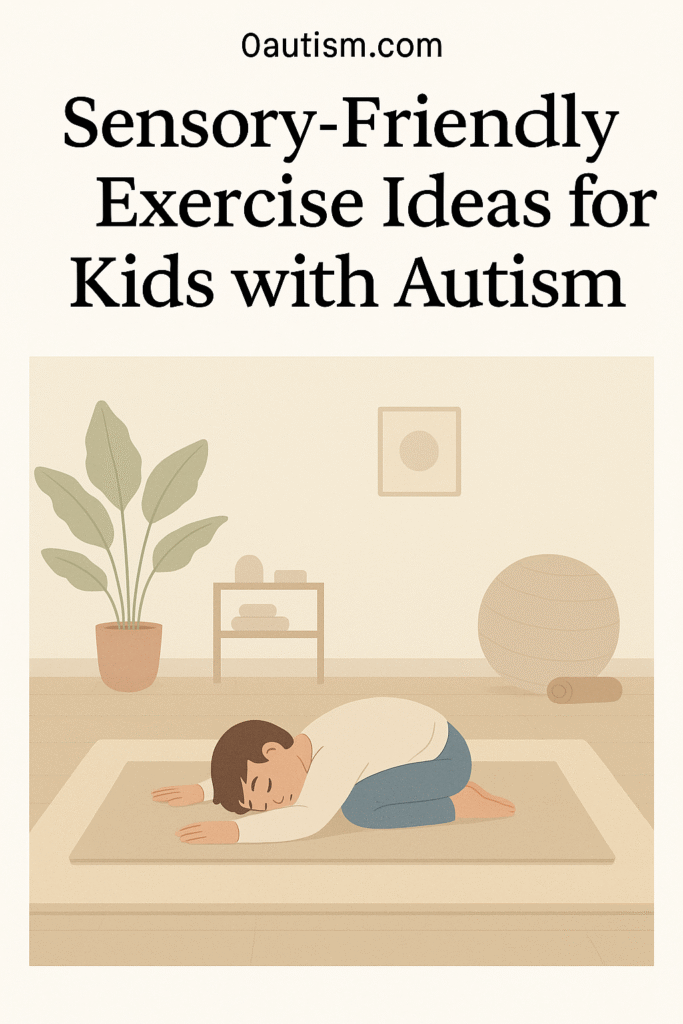
Simple yoga poses—like child’s pose, tree pose, and cat-cow—promote body awareness and emotional regulation. Use calming music, soft mats, and clear visual instructions to guide the session.
Resources like Cosmic Kids Yoga offer child-friendly videos that are sensory-conscious.
4. Sensory Obstacle Courses
Build a DIY obstacle course with pillows, tunnels, cones, or mats. You can alternate between crawling, jumping, and rolling to meet various sensory needs. Add visual cards or timers to guide transitions between stations.
Keep routines consistent but flexible—change elements slowly to avoid overwhelm.
5. Water Play & Pool Exercises
Swimming and water-based activities are excellent for children with autism. The pressure from water can be calming and helps with joint awareness. Floatation devices, water weights, and guided routines improve safety and engagement.
Ensure noise levels and lighting in the pool area are comfortable, and avoid high-traffic times.
6. Biking with Training Wheels or Adaptive Bikes
Outdoor cycling allows movement in a spacious, low-pressure environment. For some children, adaptive bikes with extra support may be needed. Biking is also a great way to practice independence and spatial navigation.
Add a familiar route and schedule to keep the activity structured and safe.
7. Dance and Rhythm-Based Activities
Free dancing to favorite music or following a simple dance routine can support both movement and emotional expression. Avoid overstimulating songs—opt for gentle rhythms and familiar beats.
You can introduce tools like scarves or soft ribbons for visual and tactile stimulation.
8. Nature Walks and Sensory Scavenger Hunts
Walking outdoors offers a blend of exercise and sensory exploration. Look for quiet, low-traffic trails. Turn it into a game: “Can you find something soft, rough, or round?” This encourages curiosity while keeping the child engaged.
Internal resource: Read our guide on Autism and Noise Sensitivity: Tips for Creating a Calm Environment.
Tips for Making Exercise Sensory-Friendly
- Start small: Begin with short sessions and increase duration as comfort grows.
- Use visuals: Picture cards and schedules reduce anxiety about what’s coming next.
- Respect preferences: Every child is unique. Let their sensory profile guide activity choices.
- Provide breaks: Incorporate rest periods with quiet, dim lighting or weighted blankets.
- Make it predictable: Repeating a structured routine gives the child confidence and security.
Safety and Accessibility Considerations
Always ensure a safe environment:
- Remove clutter or hazards from play areas.
- Supervise near water or when using equipment.
- Use non-slip mats or padded floors when needed.
For children with physical limitations or more severe sensory issues, consult an occupational therapist to customize the activities.
Technology-Assisted Movement
There are many apps and video tools that encourage physical activity in a sensory-friendly way. Some top-rated ones include:
- Sworkit Kids
- GoNoodle
- Super Stretch Yoga
These tools help create structured, low-pressure environments where children can follow along at their own pace.
Conclusion: Movement with Mindfulness
Sensory-friendly exercise ideas for kids with autism don’t have to be complicated. The key is to combine predictability, gentle sensory input, and the child’s interests. With the right support, exercise becomes more than a routine—it becomes a tool for growth, connection, and joy.
Keep experimenting and adjusting based on what your child enjoys most. Over time, these activities can contribute significantly to their well-being and sensory development.